


brief
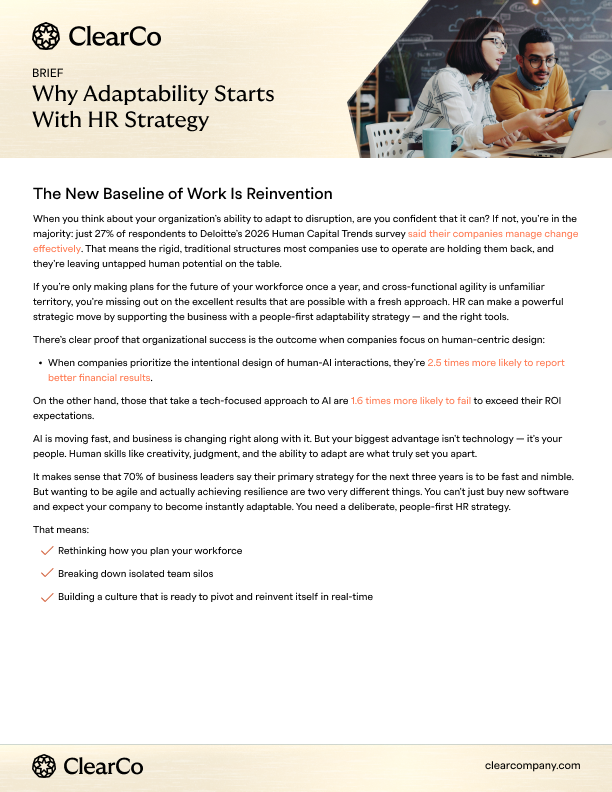
Why Adaptability Starts With HR Strategy
Break down silos, redesign roles for human-AI collaboration, and build a culture of resilience.
Turn Disruption Into Momentum
With just 27% of companies managing change effectively, rigid traditional structures are holding businesses back. Get the brief and discover how a people-first HR strategy can build a workforce ready to pivot and adapt in real-time.
Key strategies include:
- Close the execution gap: 88% of organizations know orchestrating people is important, but only 7% have made actual progress.
- Prioritize human-centric design: Companies intentionally designing human-AI interactions are 2.5 times more likely to report better financial results.
- Shift to agile talent planning: 51% of leaders now factor in human-machine collaboration when planning team size and makeup.
- Foster psychological safety: When managers encourage experimentation, employees are 1.4 times more likely to become power users of new AI tools.
- Break down silos: 82% of C-suite executives admit isolated teams block value; connecting processes is essential for cross-functional agility.
Related Resources
Whether you're refining your hiring process or building a stronger performance culture, we've got the resources to help. Explore guides, templates, and tools built for HR teams like yours.
The CHRO's Guide To Connected Talent Systes in the AI Era
Drive workforce transformation and harness AI with this Sapient Insights-backed executive blueprint.
5 AI Risks Hiding in Your Fragmented HR Stack
Layering AI on disconnected systems compounds bias, compliance gaps, and data errors.
Where To Start Connecting Your Talent Systems
Get a practical, phased approach for connecting your talent systems and putting AI to work.
Related Blogs
Browse all blogs ›Ready to get clear?
Start connecting your talent data, surfacing clearer insights,
and giving managers what they need to succeed.

.png?width=64&height=64&name=Marketing%20Icon%20(1).png "Marketing Icon (1)")